Table of Contents
How to Start a Mining Business in Namibia – Step-by-Step Guide (2026)
This guide covers the essential steps, requirements, licenses, and tips for locals and foreigners to legally start a mining business in Namibia. Namibia is one of Africa’s premier mining destinations, renowned for its vast deposits of diamonds, uranium, gold, copper, zinc, lithium, rare earth elements, and more. The sector contributes significantly to GDP and attracts substantial foreign investment, with recent offshore oil discoveries in the Orange Basin further boosting interest. Starting a mining business here offers high potential, but it requires careful compliance with the Minerals (Prospecting and Mining) Act, 1992 (administered by the Ministry of Mines and Energy – MME), environmental laws, and BIPA business registration rules.
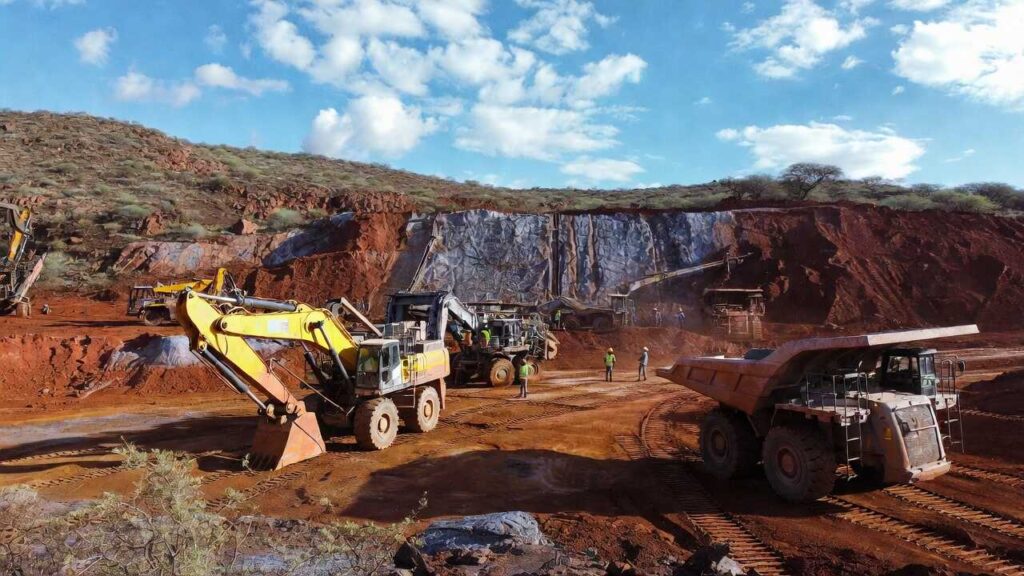
Why Start a Mining Business in Namibia?
Namibia offers:
- World-class mineral resources (top global producer of uranium and diamonds)
- Stable political environment and investor-friendly policies
- Access to SADC markets and ports
- Tax incentives for exploration and mining
- Growing demand for critical minerals (lithium, cobalt, rare earths) for the energy transition
- Opportunities for small-scale mining claims (citizens only) and large-scale licenses (open to foreigners)
Foreign investors can own 100% of mining operations (with some conditions possible on license grant), provided the entity has legal personality in Namibia (e.g., registered company or external company).
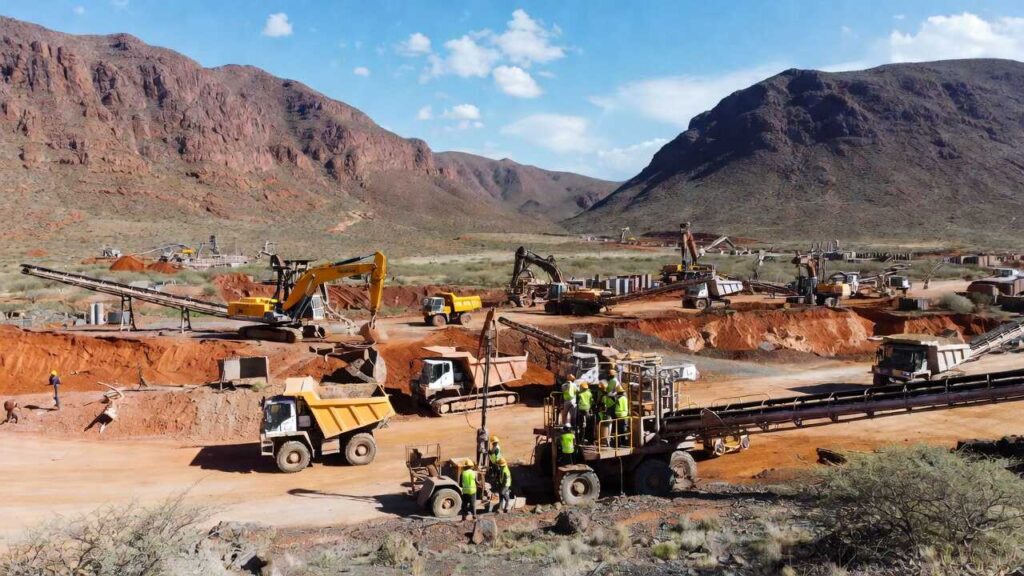
Steps to Start a Mining Business in Namibia? (Mining license in Namibia)
Step 1: Register Your Business Entity with BIPA
Before applying for mining rights, establish a legal entity in Namibia (required for holding mineral licenses).
Our common business registration options:
1.) Close Corporation (CC) – Simple, low-cost for small-scale (N$3,450 inc. VAT full package)
2.) Private Company (Pty Ltd) – Scalable for larger operations (N$14,450 inc. VAT full package)
3.) Other Entities (Trusts, Cooperatives, etc.) – N$9,950 inc. VAT
Our registration Process is fully remote – we handle name reservation, documents, and daily BIPA submissions. Turnaround: 7–14 working days.
See our packages:
Close Corporation Registration
Private Company Registration
Other Entity Registration
Foreigners: Provide notarized passport copies; no residency required.
Step 2: Understand Mining Rights & Licenses (MME)
All mineral rights are vested in the State. You must obtain licenses from the Ministry of Mines and Energy (MME).
Main types:
Non-Exclusive Prospecting License (NEPL) – Allows non-exclusive prospecting in open areas (available to any person/entity with Namibian registration).
Exclusive Prospecting License (EPL) – Exclusive rights over a large area for exploration (common for serious projects).
Mining License (ML) – For actual extraction (after proven resources).
Mining Claims (MC) – Small-scale only, reserved for Namibian citizens (up to 10 claims, 3 years + extensions).
Mineral Deposit Retention License – To hold a deposit without immediate mining.
High Value Mineral Permit – For trading semi-precious stones.
Export Permit – Required for exporting minerals.
Foreign entities: Can hold most licenses if registered in Namibia (direct as external com
Step 3: Apply for Mining Licenses in Namibia
1.) Conduct initial prospecting (if needed) under NEPL or existing rights.
2.) Submit application to MME (forms available on mme.gov.na).
3.) Include:
– Environmental Impact Assessment (EIA) and Environmental Management Plan (EMP) – approved by Ministry of Environment, Forestry and Tourism (MEFT)
– Proof of technical/financial capability
– Local content plan (preference for Namibian employment/products)
– Beneficial ownership details
4.) Fees vary (application, annual rentals, royalties based on mineral type/value).
5.) Processing time – Varies; backlog issues noted – use professional consultants.
6.) Conditions – MME may impose local equity (e.g., 15% Namibian stake in some cases) or other terms.
Apply via MME’s Mineral Rights & Resources Division.
Step 4: Obtain Additional Permits & Compliance
1.) Environmental Clearance – EIA/EMP from MEFT (mandatory).
2.) Water use license – From Department of Water Affairs.
3.) Local municipality approvals – Zoning, land use.
4.) Tax & Social Security – TIN from NamRA, SSC registration.
5.) Export permits – If exporting minerals.
5.) Safety & Labour – Comply with Mine Health & Safety regulations and employment laws.
Step 5: Develop & Operate
1.) Secure land access (negotiate with landowners or apply for ancillary rights).
2.) Conduct exploration/mining per license terms.
3.) Report annually and pay royalties.
4.) Prioritize local procurement and hiring.
Additional Tips for Success (Mining Business in Namibia)
- Foreign Investors – Register entity first; consider joint ventures for local participation.
- Small-Scale – Citizens can use mining claims.
- Critical Minerals – Focus on lithium, cobalt, rare earths for global demand.
- Consult Experts – Use legal/mining consultants for applications.
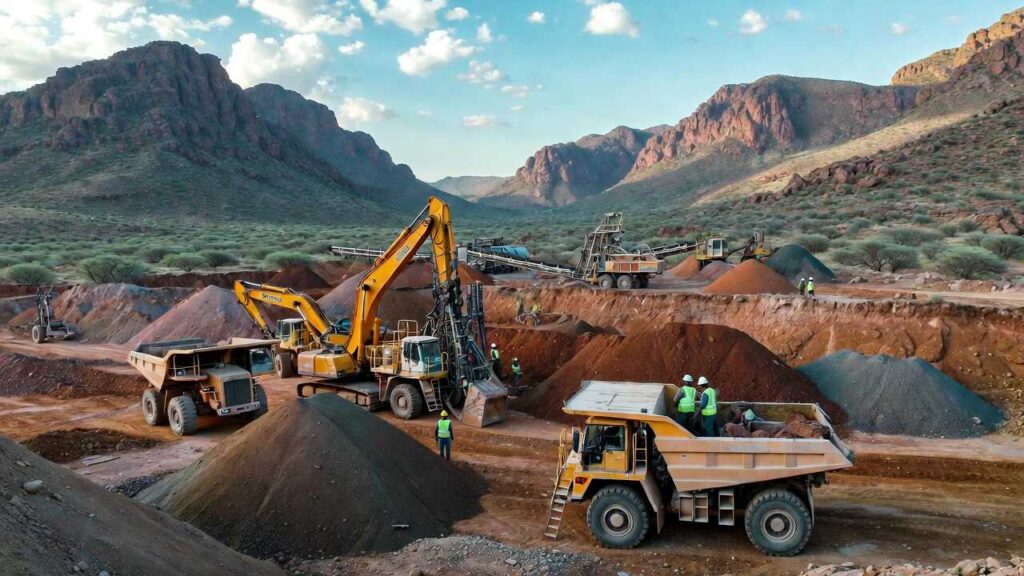
Ready to Start Your Mining Business in Namibia?
We provide full remote support for BIPA business registration – the essential first step before mining licenses.
Our Packages (inc. VAT):
- Close Corporation (CC) Registration → N$3,850.00
- Private Company (PTY Ltd) Registration → N$14,450.00
- NGO / Church Registration → N$9,950.00 (if applicable)
- Other Entity Registration → N$9,950.00
Contact us for a free consultation!
Don’t let the paperwork hold you back! Click the link and experience a smooth, efficient process to register a business in Namibia. Buy one of our business registration packages by clicking the link below to get started:
Click here so that we can help you register your business in Namibia
or click on the button below:
Frequently Asked Questions About Starting a Mining Business in Namibia
Can foreigners start a mining business in Namibia?
Yes, foreigners can own 100% of a mining operation in most cases, provided the entity is legally registered in Namibia (e.g., as a Private Company or Close Corporation). No mandatory local partner is required, though the Ministry of Mines and Energy (MME) may impose local equity or other conditions on license approval. We handle full remote registration for international founders.
What business structure is best for a mining company in Namibia?
The most common choices are a Private Company (PTY Ltd) for scalability and larger operations or a Close Corporation (CC) for smaller-scale setups. Both are fully remote and compliant for holding mining licenses. See our packages:
Close Corporation (CC) Registration → N$3,850.00 inc. VAT
Private Company (PTY Ltd) Registration → N$14,450.00 inc. VAT
How long does it take to register a mining business in Namibia?
BIPA business registration typically takes 7–14 working days with daily submissions. After that, mining licenses (EPL, ML, etc.) from MME can take several months due to EIA/EMP approvals and backlog. The full process from registration to license grant often spans 6–18 months.
What are the main mining licenses required in Namibia?
Key licenses from the Ministry of Mines and Energy include:
1.) Exclusive Prospecting License (EPL) – for exploration
2.) Mining License (ML) – for extraction
3.) Non-Exclusive Prospecting License (NEPL) – for initial prospecting
4.) Mining Claims (MC) – small-scale (citizens only)
An Environmental Impact Assessment (EIA) and Environmental Management Plan (EMP) from MEFT are mandatory before license approval.
Do I need an Environmental Impact Assessment (EIA) for mining in Namibia?
Yes, an EIA and EMP are required for all mining projects and must be approved by the Ministry of Environment, Forestry and Tourism (MEFT). This ensures environmental protection and sustainable operations.
What costs are involved in starting a mining business in Namibia?
Costs vary widely:
1.) BIPA registration: From N$3,850 (CC) to N$14,450 (PTY Ltd) inc. VAT
2.) Mining license fees: Application, annual rentals, royalties (based on mineral type/value)
3.) EIA/EMP: Professional fees (consultants)
4.) Equipment, land access, and compliance add significant capital. Contact us for a free quote on registration.
Are there any restrictions for foreign investors in Namibia mining?
Foreigners can own 100% in most cases, but MME may require local content plans (Namibian employment, suppliers) or impose equity conditions on license grant. All entities must be registered in Namibia first.
Can Namibian citizens apply for small-scale mining claims?
Yes, mining claims (MC) are reserved for Namibian citizens (up to 10 claims, 3-year duration with extensions possible). Foreigners must use larger licenses like EPL or ML through a registered company.
Do I need additional permits beyond BIPA and MME?
Yes, common additional requirements include:
1.) Water use license (Department of Water Affairs)
2.) Local municipality zoning/land use approvals
3.) Export permits (if exporting minerals)
4.) Safety compliance (Mine Health & Safety regulations)
How can I get help starting a mining business in Namibia?
We specialize in remote BIPA registration, the essential first step before applying for mining licenses in Namibia. Our packages include full compliance support. Contact us for a free consultation or quote today!
Our Packages (inc. VAT):
Close Corporation (CC) Registration → N$3,850.00
Private Company (PTY Ltd) Registration → N$14,450.00
NGO / Church Registration → N$9,950.00 (if applicable)
Other Entity Registration → N$9,950.00
What are the requirements for mining licence in Namibia
Key Requirements and Assessment Criteria:
1.) The Ministry evaluates applications based on these core factors:
2.) A sound mining program with a realistic budget.
3.) Proof of financial capability to finance and develop the project.
4.) A sound track record in exploration and/or mining operations.
5.) Availability of qualified mining experts (in-house or via a reputable mining contractor if no internal capacity exists).
6.) For Mining Licences specifically:
– A sound report detailing mineral resources and reserves (compliant with international standards such as SAMREC, JORC, or equivalent).
– A sound mine design and processing plant design.
– A pre-feasibility study demonstrating project viability.
Mandatory Environmental Requirements:
1.) An Environmental Clearance Certificate (ECC) from the Ministry of Environment, Forestry and Tourism (formerly Ministry of Environment and Tourism) is required before the Mining Licence can be issued.
2.) This involves an Environmental Impact Assessment (EIA) process.
3.) Once granted, the holder must comply with the ECC conditions and maintain an approved Environmental Management Plan.
Search Company Registration Number in Namibia
Business Company Registration in Namibia
How to Register a Church in Namibia
Business License and Registration in Namibia
How to Deregister a Company in Namibia
Understanding the Business Registration Fee in Namibia
How to Register a Charity in Namibia